You’ve started your business, but money’s tight. You haven’t got much cash to play with.
Here are 23 tactics you can use to be frugal and save money:
1. Use Lean Startup Methodology

Credit: quinet under Creative Commons license
Make sure you’re building something people want and will pay for. Don’t spend time and money building it before trying to find out. Talk to them first and make sure you understand the problem you’re trying to solve.
This is one of those things that sounds obvious, but that most people only really learn too late. Read more here.
2. Use Quick and Dirty Prototypes

Credit: juhansonin under Creative Commons license
As part of the Lean Startup ideas above, test out your ideas and assumptions with potential customers. Consider using Powerpoint slides to describe your ‘product’ before you build it.
3. Build a Minimum Viable Product, Nothing More

Credit: robad0b under Creative Commons license
To start with, build a minimum viable product (MVP) — be ruthless about leaving out everything that you possibly can.
4. Keep it Simple

Credit: dno1967b under Creative Commons license
The fewer the features you try to build and the simpler you can keep your business, the faster you can move and the cheaper it’ll be to run.
5. Don’t Hire Until You Have To

Credit: Idhren under Creative Commons license
Don’t hire too soon. Only do so when you and your cofounders really cannot manage any more.
6. Hire Interns

Credit: avhell under Creative Commons license
A job in a startup can be exciting and provide great experience for someone just getting started in their career. Offer a great learning opportunity and, especially in a tough economy, you can get help from talented, enthusiastic people for much less than you’d pay more experienced staff.
7. Get Cheap Help from Business School Students
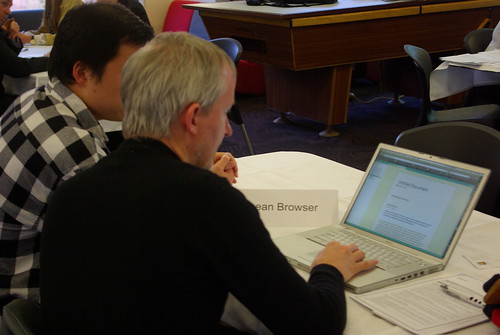
Credit: Samuel Mann under Creative Commons license
Business school students are often keen to apply what they’re learning to real-world companies and may be willing to do projects for you for free or very cheaply.
8. Get Free Help from Local Universities

Credit: University of the Fraser Valley under Creative Commons license
Universities are keen for their students and staff to get involved with industry. Some offer schemes where they’ll do projects for businesses either for free or for very subsidised rates.
9. Hire Talent Over Experience
Aim to hire people with talent who haven’t yet got the experience to command high salaries or rates.
10. Use Google Apps (Free Edition)

Credit: quinn.anya under Creative Commons license
If you have 10 or fewer employees you can use Google Apps Free Edition for your email and intranet.
11. Join Microsoft BizSpark

Credit: Microsoft Sweden under Creative Commons license
Microsoft’s BizSpark programme supports startups in a variety of ways. An important one is that they’ll give you access to free Microsoft software (Windows, Office, etc.)
12. Use Free Trials

Credit: waitscm under Creative Commons license
There are lots of web-based tools that can be handy for different things during your startup’s life — market research, website load testing, keyword analysis, and more. Often you can get a free trial of these tools, and the trial period can be long enough to get a lot of value. Later, when your business grows, come back and invest in a paid subscription.
13. Get to Know Your Customers Even Better

Credit: Wonderlane under Creative Commons license
You can’t get to know your customers too well. The better you understand them, the more effective your paid marketing will be and the less you’ll need to spend to get the same results.
14. Set Up Reciprocal Marketing Deals with Related Businesses

Credit: PolandMFA under Creative Commons license
Find a business that targets a similar demographic. Promote their business to your followers in return for them promoting your business to their followers.
15. Set Up Revenue-Sharing Deals
Instead of paying up-front, negotiate with publishers to market your business in return for a cut of the profits they bring you.
16. A/B Test Continually

Credit: Gamma-Ray Productions under Creative Commons license
A/B testing can improve the effectiveness of the key conversion funnels of your business. Many small, incremental improvements over time can translate to a huge improvement in the long run.
17. Do Your Own PR

Credit: Gonmi under Creative Commons license
Instead of hiring a PR consultant or agency, do your own PR. Journalists prefer to hear from founders anyway. If you’re based in the US, subscribe to Help a Reporter Out (HARO) to connect with journalists writing relevant stories.
18. Hire Freelancers Over Agencies

Credit: banditob under Creative Commons license
Save money by hiring freelancers instead of agencies. Freelancers typically have lower overheads than agencies and can be more flexible about the rates they charge and the way they work.
19. Attend Local Industry Events to Get Free Advice from Experts

Credit: adria.richards under Creative Commons license
If you live in a major city there are probably events where you can find experts in different areas. Don’t abuse it, but you’ll often find people willing to give you some free advice over a couple of drinks. Some events are more structured and directly tailored to startups, for example BootLaw in London is a great way to learn about law related to startups.
20. Work From Home

Credit: Iain Farrell under Creative Commons license
If it’s just you when you’re starting out, work from home. Save the money you’d otherwise be spending on rent.
21. Ask Suppliers What Special Deal You Can Get

Credit: Danny Nicholson under Creative Commons license
If you don’t ask, you won’t get. Being a young company is a great reason to ask for special deals. You won’t always get them, but it doesn’t hurt to ask.
22. Keep Tight Control of Spending

Credit: sovietmole under Creative Commons license
Consider having just one credit card for the company so that all the money goes through one person with an overview of the company’s finances.
23. Champion Frugality
Lead by example and cultivate a culture of frugality within the company. Make it clear that a frugal attitude is valued.
(Thanks to Julian Hearn for tips 18 & 20.)



0 Comments